Government approves three new SEZ developments in January
| News Highlights |
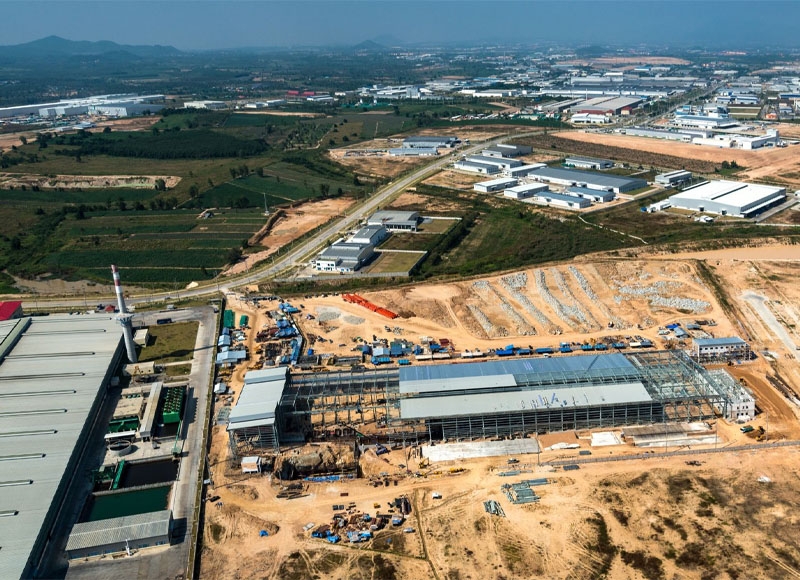
Government approves three new SEZ developments in January In January 2026, the Cambodia Investment Committee approved 43 investment projects with a total capital of approximately $752 million, expected to create about 26,000 jobs. Economists indicate that the increasing number of Special Economic Zones (SEZs) in Cambodia will enhance foreign direct investment (FDI) opportunities. However, the number of registered projects decreased by 25 compared to January 2025, despite a slight increase in total investment capital. Three new SEZs were also endorsed, totaling $260 million and projected to generate 868 jobs. SEZs facilitate investment by providing essential infrastructure and efficient services tailored to factory owners, with a significant role in attracting FDI, especially from China. (Source: Khmer Times)
Cambodia records strong start to 2026 with 19% trade growth in January Cambodia's economic outlook for 2026 shows promise, reflected in a 19.1% increase in international trade to over $6 billion in January, bolstered by a 26.6% rise in exports ($2.91 billion) and a 12.8% increase in imports ($3.1 billion). The U.S. remains the largest export market, making up 43.9% of exports. Key growth was seen in exports to China, which surged 59.3%, while imports from China accounted for 56.1% of total imports. The uptick in trade is attributed to recovering global demand and trade agreements, although concerns remain regarding a widening trade deficit and reliance on imports for production. Analysts stress that while the growth signals positive momentum, vulnerabilities due to external shocks and currency fluctuations persist. (Source: Khmer Times)
Yuanta Securities Report: Why a $10 million bond can outperform 200 loans in Cambodia's banking system As Cambodia's banking sector experiences a slowdown in credit growth, a February 2026 report from Yuanta Securities highlights the importance of bond investments for enhancing capital efficiency and managing costs. The traditional model of collateral-centric lending is deemed insufficient due to rising competition and diminished margins. Yuanta recommends transitioning to structured bond investments, which provide cash-flow assessments, thereby reducing operational burdens and increasing risk-adjusted returns. The report emphasizes the efficiency of bonds by comparing a single $10 million bond to 200 individual $50,000 loans, showcasing lower operational costs. To mature the bond market, the establishment of secondary trading for a reliable yield curve and improved liquidity is necessary. With 24 issued bonds across 11 sectors, banks are encouraged to manage bond investments actively to contend with tightening lending margins and advance Cambodia's financial development. (Source: Cambodia Investment Review)
